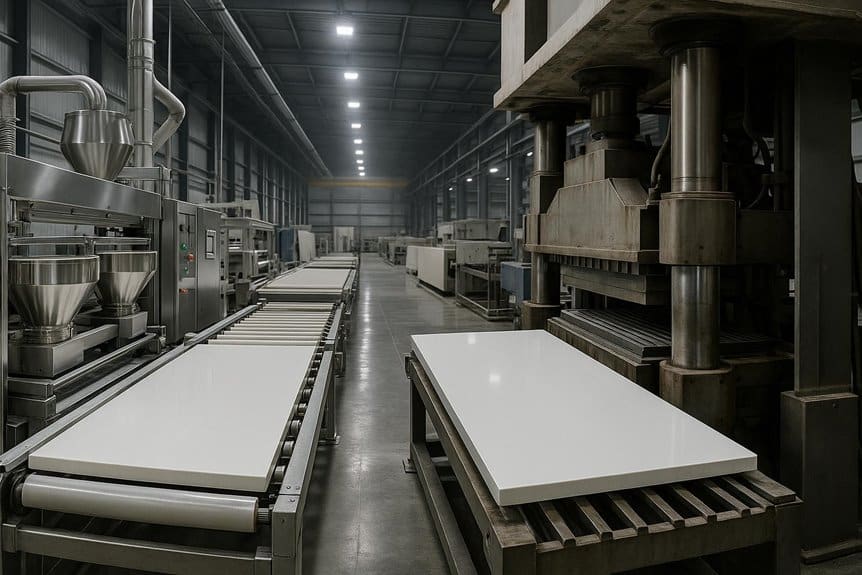
A complete quartz stone production line is not just one or two machines. To produce stable, saleable quartz slabs, the raw material system, batching equipment, mixer, distribution system, press machine, curing oven, polishing line, cutting equipment, inspection area, and environmental systems all need to work together as one integrated production line.
For many buyers, the challenge is not only knowing the names of the machines. It is understanding which equipment is essential, what each machine does, and how the configuration should change based on slab size, production capacity, automation level, factory space, and product quality requirements.
This guide explains the main equipment used in a complete quartz stone production line, from raw material preparation to finished slab handling. It will help you understand the role of each equipment group, avoid confusing quartz slab production equipment with simple cutting or fabrication machines, and prepare better information before requesting a production line quotation.
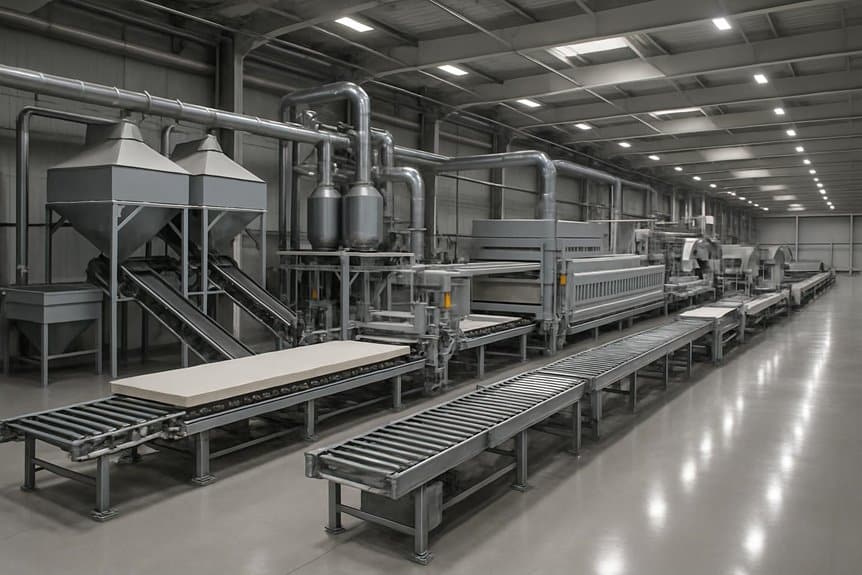
A complete quartz stone production line usually includes raw material handling, weighing and batching, mixing, distribution, pressing, curing, cooling, calibrating, polishing, cutting, inspection, packaging, and environmental treatment systems.
In factory planning, each unit is selected to maintain controlled material flow, stable formulation accuracy, and predictable slab quality.
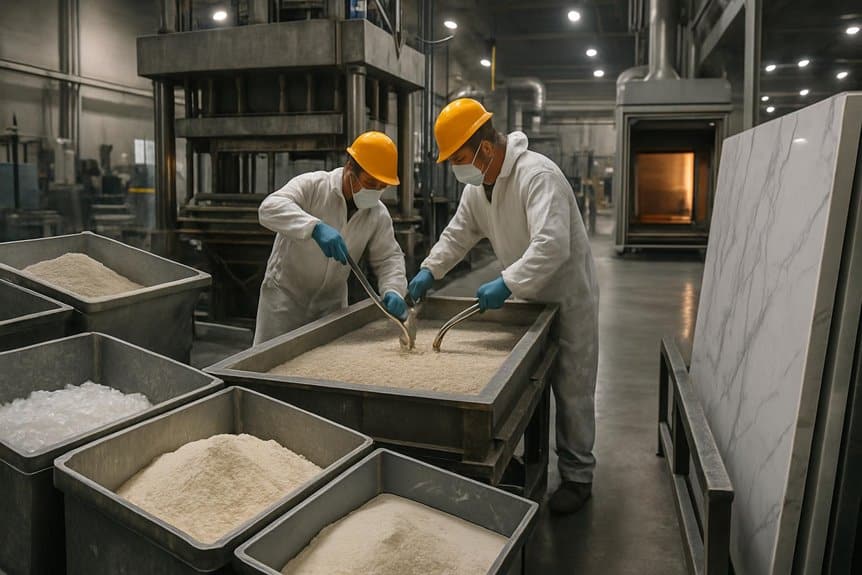
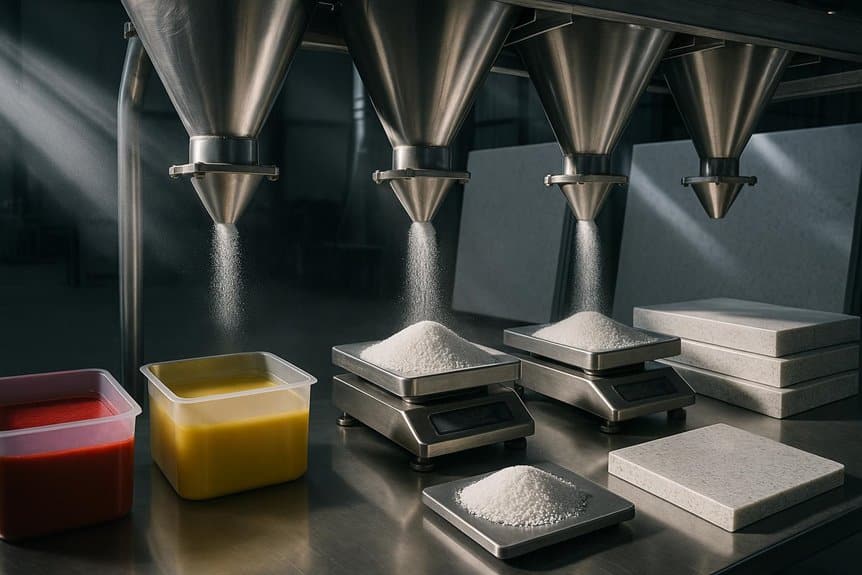
Raw material systems convey quartz aggregates, resin, pigment, and additives to metered batching devices. Mixers homogenize the formulation before the distribution equipment feeds the press area.
Pressing and curing units define slab density, structure, and dimensional stability, while cooling equipment prepares slabs for downstream finishing.
Calibrating, polishing, and cutting machines control thickness, surface gloss, and final size. Inspection and packaging stations support release control.
Integrated environmental equipment manages dust and emissions. Together, quartz slab production line equipment and quartz stone machinery form a coordinated production system.
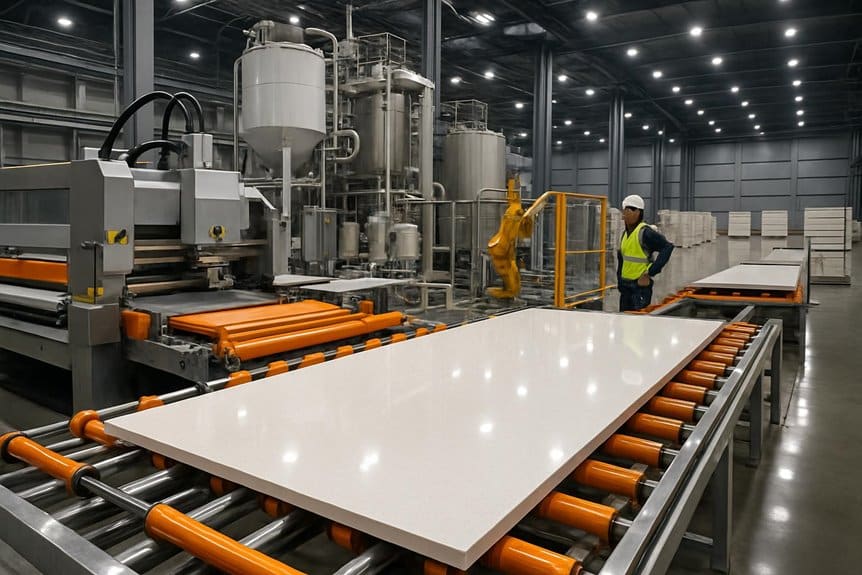
A complete quartz stone production line is not a single machine, but a connected system of equipment that turns raw quartz materials into finished slabs. Each machine supports the next stage, so the line must be planned as a continuous workflow rather than a group of separate machines.
The typical equipment flow is:
Raw material storage → weighing and batching → mixing → material distribution → pressing → curing → cooling → calibrating → polishing → cutting → inspection → film protection → finished slab storage
In the first stage, quartz sand, quartz powder, resin, pigments, and additives are stored, measured, and mixed according to the required formula. The mixed material is then distributed evenly into the mold or forming area before entering the press system, where vacuum, vibration, and pressure help form a dense slab structure.
After pressing, the slab moves through curing and cooling, so the material becomes stable enough for surface processing. The slab is then calibrated for thickness, polished to the required surface finish, trimmed or cut to size, inspected for defects, protected with film, and transferred to the finished slab storage area.
For buyers, understanding this full equipment flow is important because each stage affects production stability, slab quality, labor requirements, and final yield. A well-designed quartz stone production line should allow materials, slabs, operators, and handling equipment to move smoothly from one stage to the next without unnecessary delays or bottlenecks.
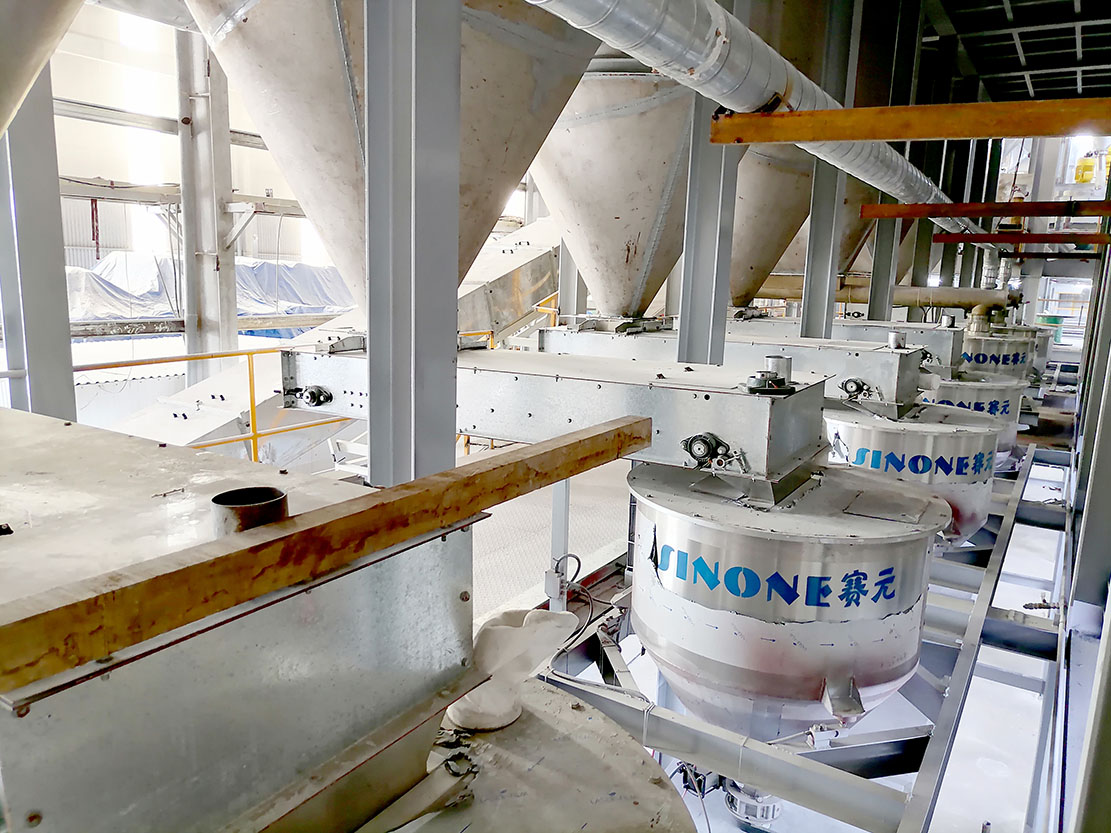
Raw material preparation is the first equipment stage in a quartz stone production line. Before mixing, each material must be stored, measured, and delivered accurately according to the slab formula. If this stage is not stable, later processes such as mixing, pressing, curing, and polishing cannot fully correct the problem.
A complete raw material system usually includes storage bins or silos for quartz sand and quartz powder, feeding conveyors, resin supply equipment, additive tanks, automatic weighing devices, and a batching control system. The purpose is to make sure quartz aggregates, powder, resin, pigments, curing agents, and other additives enter the mixer in the correct ratio.
For factory-scale quartz slab production, manual weighing is usually not ideal. It increases labor demand and makes formula control less stable, especially when producing different colors, thicknesses, or slab series. An automatic weighing and batching system helps improve production consistency, reduce material waste, and make it easier to repeat the same product formula across different batches.
Batching accuracy directly affects the quality of the finished quartz slab. If the quartz sand, quartz powder, resin, or additives are not measured correctly, the slab may have color differences, poor bonding, unstable curing, bubbles, pinholes, uneven density, or lower strength.
Accurate batching also affects production cost. Resin, pigments, and additives are important cost items in quartz stone manufacturing. Overuse increases material cost, while underuse may reduce slab quality and increase the rejection rate. For this reason, a reliable batching system is not just a feeding system — it is part of the quality control and cost control structure of the whole production line.
When comparing quartz stone production line equipment, buyers should check whether the raw material system supports stable feeding, accurate weighing, formula storage, easy cleaning, and flexible adjustment for different slab colors and product specifications. For manufacturers planning long-term production, this stage is essential for maintaining consistent slab quality and improving overall yield.

Mixing and material distribution are critical stages before quartz slab pressing. After quartz sand, quartz powder, resin, pigments, and additives are accurately batched, they must be thoroughly mixed into a uniform mixture before entering the slab-forming stage.
The mixing system usually includes a quartz stone mixer, resin and pigment feeding system, material conveying equipment, and discharge control system. Its main function is to make sure the quartz particles are evenly coated with resin, while pigments and additives are distributed consistently throughout the mixture.
For quartz slab production, mixing quality directly affects the appearance and internal structure of the finished slab. Poor mixing may lead to color variation, uneven texture, dry material areas, weak bonding, pinholes, or unstable slab density. This is especially important when producing marble-look quartz slabs, multi-color designs, or customized surface patterns.
After mixing, the material is transferred to the material distribution system. This equipment spreads the mixed material evenly into the mold or forming area before pressing. A stable distribution system helps control slab thickness, material density, surface uniformity, and pattern consistency. It also reduces empty areas, uneven accumulation, and defects caused by poor material placement.
When comparing mixing and distribution equipment, buyers should look at mixing uniformity, production capacity, cleaning convenience, color-change efficiency, discharge stability, and compatibility with different slab designs.
For factories planning to produce multiple colors or premium quartz patterns, easy cleaning and flexible material distribution are especially important. If the mixer and distributor are difficult to clean, color changeovers take longer, and cross-contamination may affect the next batch.
A reliable mixing and distribution system should support stable formula execution, consistent material flow, and repeatable slab quality. In a complete quartz stone production line, this stage connects raw material preparation with pressing quality, so it plays an important role in both product appearance and production yield.

The quartz stone press machine is one of the core machines in a quartz slab production line. After the mixed material is distributed into the mold or forming area, the press machine compacts the material under controlled pressure, vibration, and vacuum conditions to form a dense quartz slab.
In quartz slab manufacturing, pressing is not only about shaping the slab. The press system helps remove air, improve material compaction, increase slab density, reduce pores, and create a more stable internal structure. This stage has a direct impact on the finished slab’s strength, flatness, surface quality, and overall yield rate.
A complete quartz stone pressing system usually includes the press machine, vacuum system, vibration system, mold system, hydraulic or air spring structure, slab transfer system, and automatic control system. These components need to work together smoothly to ensure each slab is pressed consistently.
Pressing quality directly affects the final quality of the quartz slab. If the vacuum effect is weak, air may remain inside the slab and cause bubbles, pinholes, or hidden structural defects. If the vibration and pressure are not evenly controlled, the slab may have uneven density, poor flatness, or inconsistent strength.
For buyers comparing quartz stone production line equipment, the press machine should be evaluated carefully. Key factors include supported slab size, pressing cycle, vacuum performance, vibration stability, pressure control, mold compatibility, automation level, maintenance requirements, and long-term operating stability.
A reliable press machine helps manufacturers produce quartz slabs with higher density, fewer defects, better surface consistency, and more stable production yield. For factories targeting premium slabs, jumbo slabs, or high-volume production, the press system is one of the most important equipment decisions in the whole production line.

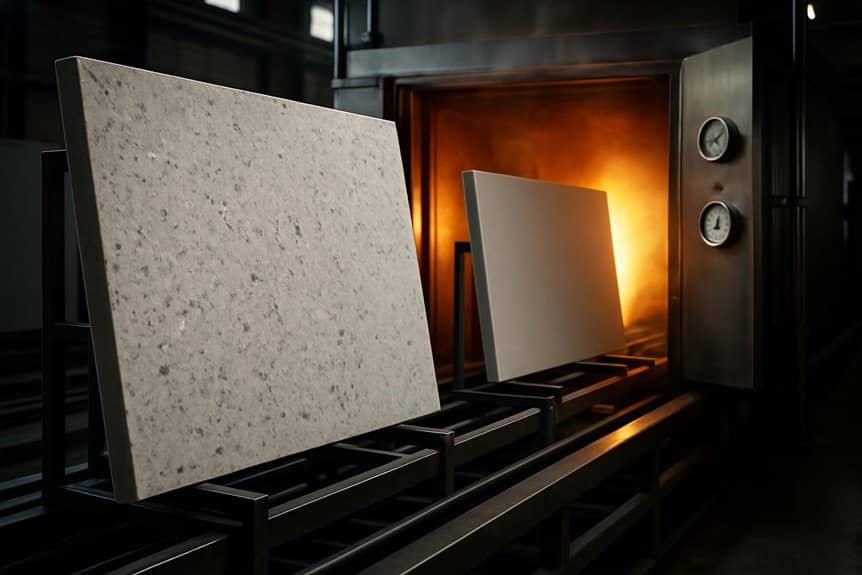
After pressing the slab, the curing oven stabilizes the material by hardening the resin system under controlled temperature and time conditions.
The oven must provide uniform heat distribution across the slab width and length to prevent incomplete curing, internal stress, or dimensional variation. Temperature control systems regulate heating zones according to resin formulation, slab thickness, and production speed.
Curing time control defines how long each slab remains in the heated chamber, ensuring full polymerization without overheating.
A synchronized slab transfer system moves slabs from the press into the oven and onward without impact, vibration, or position error.
After curing, the cooling line gradually reduces slab temperature under controlled handling conditions, preparing the material for downstream processing while maintaining flatness, stability, and consistent mechanical performance.

Calibration, polishing, and surface finishing equipment are used after curing to bring the quartz slab to its final thickness, flatness, and surface quality. At this stage, the slab has already been formed and hardened, but it still needs precise finishing before it can meet commercial requirements for countertops, interior decoration, and project applications.
The finishing section usually includes a calibration machine, a thickness setting machine, grinding equipment, a polishing machine, a slab cleaning system, and a surface inspection area. These machines work together to control the slab’s thickness tolerance, remove surface unevenness, improve flatness, and create the required gloss or surface finish.
Calibration is the first key step in surface finishing. It adjusts the slab to a consistent thickness across the full surface. If calibration is not accurate, the slab may be difficult to cut, fabricate, install, or match with other slabs in the same project.
After calibration, the slab enters the polishing system. The polishing machine uses multiple polishing heads and abrasives to improve surface smoothness and gloss. For quartz slab manufacturers, polishing quality directly affects the final appearance, touch, and market value of the slab.
Even if the slab is well pressed and cured, poor finishing can reduce its commercial value. Buyers often judge quartz slabs by surface gloss, flatness, color clarity, thickness consistency, and the absence of visible defects. If the polishing line is unstable, the slab may show uneven gloss, scratches, waves, edge defects, or inconsistent surface quality.
When comparing quartz stone production line equipment, buyers should check calibration accuracy, polishing head configuration, surface consistency, production speed, maintenance convenience, abrasive consumption, water usage, and compatibility with the target slab size.
A reliable polishing system helps manufacturers produce quartz slabs with stable thickness, smooth surfaces, consistent gloss, and better finished-product quality, making the slabs easier to sell into countertop, commercial interior, and project markets.

Following polishing, the quartz slab production line moves into final sizing, quality verification, surface protection, and storage. A cutting machine or trimming unit squares edges, corrects length tolerance, and prepares slabs for standard or ordered dimensions.
The inspection table then provides a stable, illuminated surface for controlled defect checking, including cracks, pinholes, color variation, edge damage, and polishing inconsistency.
An illuminated inspection table supports controlled defect checks for cracks, pinholes, color variation, edge damage, and polishing inconsistency.
After approval, a film applicator applies protective film uniformly across the slab face to reduce scratching during movement and shipment. Slab turning or handling equipment rotates, lifts, and transfers heavy panels while limiting impact risk and manual intervention.
Finished slab storage systems, including racks or A-frame structures, organize qualified slabs by size, batch, color, and grade, giving the factory controlled access, traceability, and dispatch readiness.
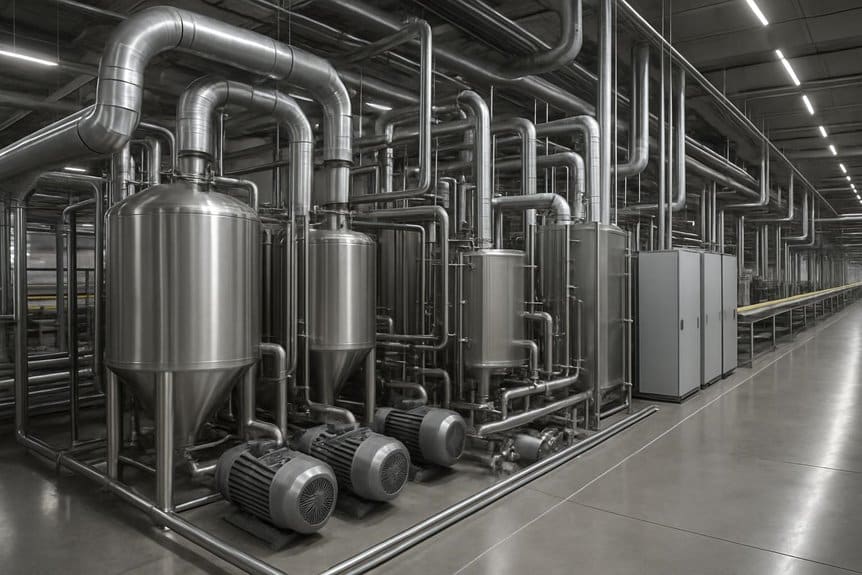
Auxiliary systems are the support systems that keep a quartz slab production line running safely, cleanly, and consistently. Although buyers often focus first on the mixer, press machine, curing oven, and polishing line, the auxiliary systems are just as important for daily operation, environmental control, and long-term production stability.
A complete quartz slab production line may require electrical control systems, compressed air systems, dust collection equipment, wastewater treatment systems, ventilation systems, slab transfer equipment, maintenance tools, and spare parts support. These systems help connect the main production equipment into a complete factory workflow.
For example, quartz slab polishing and cutting usually generate slurry, wastewater, dust, and noise. Without a proper wastewater treatment system and dust collection system, the factory may face higher water consumption, difficult cleaning, environmental compliance issues, and unstable working conditions. A good auxiliary system helps improve workshop safety while reducing waste and operating costs.
The electrical and automation control system is also important. It helps coordinate feeding, mixing, pressing, curing, polishing, and material handling so the production line can operate with better consistency. For higher-capacity factories, automation control can reduce manual errors, improve production tracking, and make the line easier to manage.
Handling equipment should not be ignored either. Quartz slabs are large, heavy, and easy to damage if moved incorrectly. Slab transfer systems, turning equipment, lifting devices, and storage racks help reduce breakage, improve worker safety, and protect finished slabs during production.
A quartz stone production line is not only a group of main machines. If auxiliary systems are missing from the quotation, buyers may underestimate the real investment, installation requirements, and operating cost of the factory.
When comparing suppliers, buyers should check whether the quotation includes or clearly explains wastewater treatment, dust collection, electrical control, compressed air, ventilation, slab handling, installation tools, spare parts, and maintenance support. These systems directly affect production efficiency, environmental compliance, workshop safety, and long-term equipment performance.
A well-designed auxiliary system helps the quartz slab factory operate with cleaner production, safer handling, lower waste, and more stable daily output.
Button text:
Not every quartz stone production line quotation includes the same equipment. Some systems are required for basic slab production, while others depend on capacity, automation level, product design, factory layout, and budget.
Essential equipment refers to the machines and systems needed to produce quartz slabs from raw materials to finished products.
This usually includes:
Without these core systems, the production line cannot complete the full quartz slab manufacturing process. Each stage supports the next one: materials must be batched accurately, mixed evenly, distributed properly, pressed under stable conditions, cured correctly, polished to the required surface quality, and inspected before storage or shipment.
Optional equipment depends on the factory’s production goals and market positioning.
This may include:
For example, a factory producing standard quartz slabs may use a simpler configuration. A plant targeting jumbo slabs, marble-look designs, premium products, or high-volume export production may need more automation, larger press capacity, better handling systems, and higher finishing efficiency.
This is why buyers often receive very different quotations from different suppliers. A lower price may not include important support systems, while a higher price may include equipment that improves production stability, reduces labor, supports larger slab sizes, or prepares the factory for future expansion.
When comparing quartz stone production line equipment, buyers should ask:
Which equipment is essential for my production goal, and which upgrades are worth adding for long-term performance?
A reliable supplier should explain the function of each system clearly and recommend a configuration that matches the buyer’s slab size, capacity target, product positioning, factory conditions, and investment plan.
The right quartz stone production line configuration should match your production goal, not just your budget. Before choosing machines, buyers should confirm the slab size, target capacity, product type, factory conditions, and automation level.
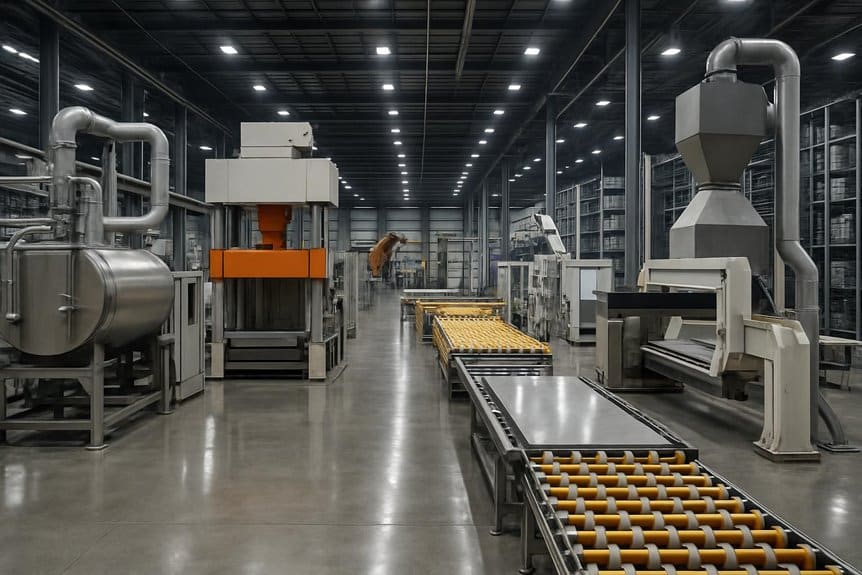
1. Slab size and thickness
Standard slabs, jumbo slabs, and thicker slabs may require different press sizes, mold systems, curing capacity, cutting equipment, and handling systems.
2. Production capacity
A small or medium-capacity line may use a simpler configuration. A high-output factory may need faster batching, larger mixers, stronger curing capacity, and a higher-capacity polishing line.
3. Product positioning
Standard quartz slabs, marble-look slabs, multi-color designs, and premium slabs may require different mixing, distribution, pressing, and surface finishing systems.
4. Labor and automation level
If labor cost is high or skilled operators are limited, a more automatic production line can improve consistency and reduce manual errors. If the initial budget is limited, a semi-automatic line may be more practical.
5. Factory conditions
Available space, workshop height, power supply, water supply, compressed air, drainage, ventilation, and environmental requirements can all affect equipment selection.
6. Future expansion
If the factory may increase capacity later, the layout and equipment plan should leave room for extra polishing equipment, storage systems, automation upgrades, or a second production line.
The best equipment configuration is not always the cheapest or the most advanced option. It should match your slab size, production capacity, product quality target, factory layout, labor conditions, and investment plan. A well-matched configuration helps improve production stability, reduce waste, and support long-term profitability.
Before requesting a quartz stone production line quotation, buyers should prepare basic project information. This helps the supplier recommend the right equipment configuration instead of giving a general machine price. The following is key Information to prepare:
1. Target slab size and thickness
Confirm whether you plan to produce standard slabs, jumbo slabs, or customized sizes. Slab thickness also affects pressing, curing, cutting, and polishing requirements.
2. Expected production capacity
Prepare your target daily or annual output. This helps determine the size and speed of the batching system, mixer, press, curing oven, polishing line, and handling equipment.
3. Product style and surface finish
Clarify whether you want to produce standard quartz slabs, marble-look slabs, multi-color slabs, premium designs, or customized patterns.
4. Preferred automation level
Decide whether you need a semi-automatic or automatic quartz stone production line based on labor cost, budget, output target, and quality consistency requirements.
5. Factory size or layout drawing
If you already have a workshop, provide the factory dimensions, height, entrance position, power room, water supply, drainage, and available storage area.
6. Local raw material situation
Share whether quartz sand, quartz powder, resin, pigments, and additives can be sourced locally or need to be imported.
7. Utility and environmental requirements
Prepare information about voltage, power supply, water supply, compressed air, drainage, dust collection, wastewater treatment, and local environmental standards.
8. Budget and installation timeline
A rough budget range and target installation schedule help the supplier recommend a realistic solution.
A quartz stone production line quotation should be based on your real production conditions. Two buyers may request the same “quartz stone equipment,” but need very different configurations because their slab size, capacity, automation level, factory layout, and market positioning are different.
The more clearly you prepare this information, the easier it is to receive an accurate quotation and compare suppliers fairly.
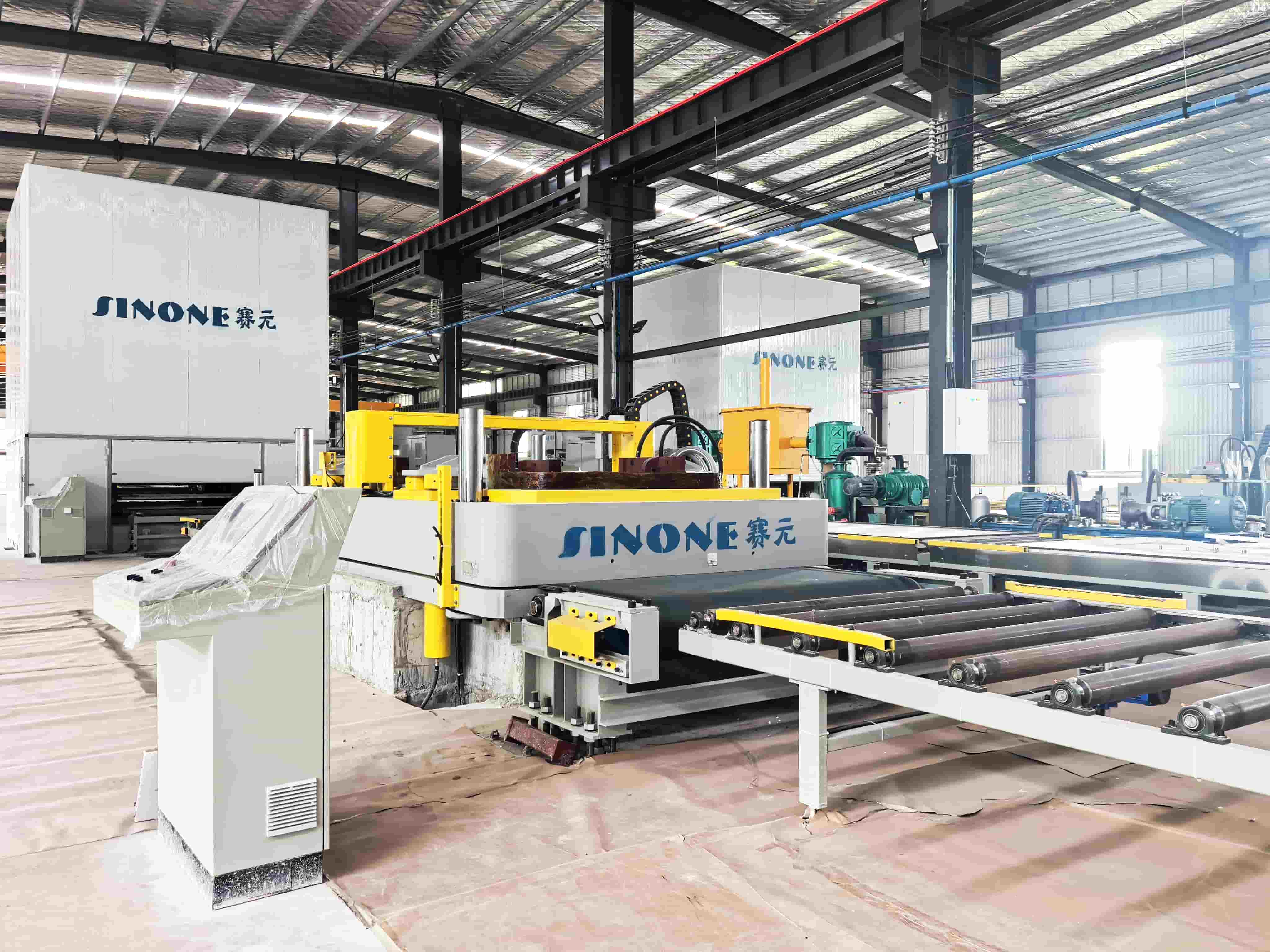
Choosing the right equipment list is only the first step. To build a stable quartz slab production line, each system should be configured around your actual production goal, including slab size, production capacity, automation level, factory layout, product design, and investment plan.
SINONE specializes in quartz stone and inorganic stone production line solutions, covering batching, mixing, material distribution, pressing, curing, polishing, cutting, inspection, auxiliary systems, and environmental treatment. We help buyers match the equipment configuration with their target output, workshop conditions, labor situation, and product quality requirements.
For new factory investors, this helps reduce early planning mistakes. For existing stone manufacturers, it can support capacity expansion, automation upgrades, and production line optimization.
Need a complete quartz stone production line equipment list for your project? Contact us to discuss your target slab size, production capacity, factory conditions, and suitable equipment configuration.
Typically, operator training takes 3–7 days, the control panel serving as a compass. Trainees learn startup, shutdown, feeding, screening, washing, alarms, safety interlocks, maintenance checks, and parameter adjustment under supervised production conditions.
Export requirements typically include ISO 9001, CE compliance for machinery, ISO 14001, occupational safety certification, and destination-specific electrical, emissions, and product standards. He should verify importing-country rules, inspection protocols, labeling, and documentation before shipment.
Molds should be replaced when dimensional drift, surface defects, wear, or demolding issues exceed tolerance, typically after validated cycle-count limits. They should be inspected routinely, logged, refurbished if possible, and retired before quality instability emerges.
Yes, used equipment can produce premium quartz slabs if presses, mixers, vacuum systems, ovens, calibrators, and polishers maintain tolerances. He should verify wear, automation accuracy, thermal uniformity, vibration, maintenance history, and retrofit feasibility before purchase.
Standard warranty terms are typically 12 months after commissioning or 18 months after shipment. The assumption that premium brands give longer coverage is only partly true; exclusions usually cover wear parts, misuse, consumables, and improper installation.


[…] Practical capacity control, consequently, starts with a whole-factory flow model, not an equipment list. […]